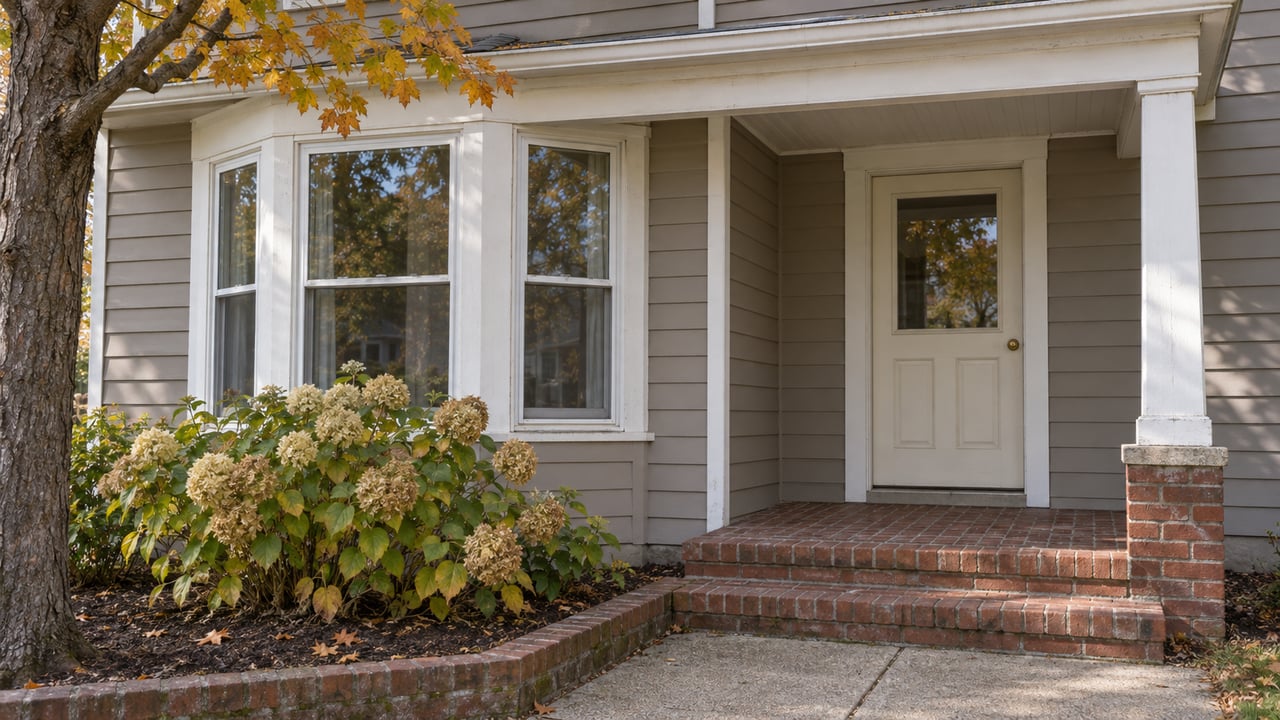
Picture a buyer who plans to live in a Historic Northside house and rent out the spare bedrooms. A city rule applies before the first lease is signed. Under Iowa City Code 17-5-16, an owner who lives in the home can let to one tenant per dwelling unit without a rental permit. A second tenant means the owner needs a permit. For an owner-occupied single-family house or duplex, the city will not issue one unless the owner documents a bona fide intent to move out for at least 180 consecutive days.
That rule makes sense once you see what the state took off the table. Iowa law now stops cities from regulating occupancy by family relationship and from capping rental permits on single-family homes and duplexes. So Iowa City manages rental density with the tools it has left: floor area, bedroom ratios, permit status, and whether the owner lives at the address. For anyone buying on the Northside with rental income in mind, those are the numbers that set what a house can do.
The one-tenant line and the 180-day exit
The one-tenant exception counts tenants, and it counts them per unit. The code gives its own example. If two owners live in a single-family home, they still need a rental permit once they have two or more tenants.
Past that line, an owner-occupant of a single-family house or duplex can get a permit only by showing plans to leave. The code lists the kinds of documents that count, "including but not limited to":
- Transfer of employment or acceptance of a new job
- Military orders
- Acceptance to an educational institution
- A signed purchase agreement or lease for another home
- A marriage license
The permit is revoked if the owner hasn't moved out within 180 days of its issuance. The code also says the Board of Appeals has no authority to hear an appeal of a denial or revocation under this provision, or to grant a variance. In practice, Iowa City's code splits a house into two cases. It can be a home with one tenant, or a rental the owner has left. The live-in landlord with a full house of renters has no category.
Why the city stopped counting relationships
According to the City of Iowa City's rental permit page, state legislation that took effect January 1, 2018 forced a change in how the city regulates occupancy. Before then, city code allowed no more than three unrelated people in the same dwelling, a rule the city called "critical in regulating density and overcrowding."
The state's restrictions go further than that. Iowa Code chapter 414 says a city "shall not adopt or enforce any regulation, restriction, or other ordinance related to residential property rental permit caps on single-family homes or duplexes." The same chapter also bars occupancy rules for rental property that are based on family relationship. With both tools gone, the city can no longer limit how many houses on a block hold rental permits, and it can no longer ask how the people in a house are related.
City zoning still allows one household per dwelling unit in the single-family zones. The code defines a household by a shared housekeeping arrangement, with shared responsibilities and expenses, and family ties are not part of the test. That leaves physical measurements as the city's main way to say how many people a rental can hold.
What the tape measure decides
The housing code sets rental occupancy through standards that apply the same way to every household. In 2018 the city added rules aimed at owners who create more bedrooms.
| Rule | Standard |
|---|---|
| Habitable area | 120 sq ft for the first occupant, plus 100 sq ft for each additional occupant |
| Sleeping rooms | 70 sq ft for one occupant, plus 40 sq ft for each additional occupant |
| Total bedroom area when adding bedrooms | No more than 35% of the dwelling's finished floor area |
| New bedrooms | At least 100 sq ft each, with interconnected smoke alarms |
| Duplexes | Units must be permanently separated |
| Backyards | Zoning restricts paving them for parking |
| Existing house short on required parking | Occupancy of no less than three adults, or two in a one-bedroom unit |
| Existing house short on usable open space | One adult per 100 sq ft of usable open space provided |
The 35% rule is the one that changes renovation math. Take a hypothetical house with 1,400 finished square feet. If the owner adds bedrooms, total bedroom area can't go above 490 square feet, and each new bedroom has to be at least 100 square feet. Turning a den into a fourth bedroom only works if the bedrooms already in the house leave room under that ceiling. The parking and open-space rows matter on older lots. Before a new rental permit is issued for a single-family house or duplex, the property has to meet the open-space and parking requirements. When existing buildings make that infeasible, the code ties occupancy to the parking fallback or to the amount of usable open space, and the open-space limit can be reduced further based on factors such as parking.
Read together, these rules mean that two Northside houses with the same number of bedrooms can have very different legal rental capacity. The difference comes from the size of the rooms, the share of the house they take up, and what the lot provides outside.
The night-by-night exception
Short-term rentals fall under a different section of the same state law. Iowa Code defines a short-term rental as a home or unit "offered for a fee for thirty days or less." It bars cities from adopting any regulation of these properties, conditional use permits included. The exceptions cover fire and building safety, sanitation, traffic, noise, property maintenance, nuisance, certain prohibited uses, and naming an emergency contact. Any such rule has to be enforced the same way it is for similar properties that aren't short-term rentals. The statute also says "a city shall not require a license or permit fee for a short-term rental property."
So a house rented out by the semester, beyond the one-tenant owner-occupant exception, goes through the full permit process: a certificate, a permit, fees and inspections. The same house booked by the weekend falls under a much narrower set of city powers. The city's rental permit page includes an "Air B&B" link to its online permit portal but doesn't explain what that link is for.
As KCRG reported in January 2026, Iowa City counted 74 single-family homes citywide being used as short-term rentals. Stan Laverman, the city's Senior Housing Inspector, told KCRG that "a lot of times the same homes that would be available for first time home buyers are very prime targets for short term stay." He said his biggest concern was short-term rentals not following local rental rules, including inspections and city code. KCRG also noted that the city doesn't track apartments and condos used as short-term rentals.
Where the Northside parts ways with the rest of the city
The physical rules above apply citywide. The Northside adds a layer of exterior review that most of Iowa City doesn't have.
A 2024 state law, HF 2388, enacted as 2024 Acts chapter 1174, bars cities from restricting exterior cladding or finish materials on homes beyond what the state building code requires. The law exempts buildings in state or local historic districts, designated landmarks, and properties covered by an overlay or special purpose zoning district.
Brown Street and Northside are two of the eight Iowa City historic districts protected by local preservation zoning, and Goosetown/Horace Mann is one of its five conservation districts. Within those areas, the Historic Preservation Commission reviews requests for exterior changes to make sure they fit the character of the building and neighborhood.
That review matters for anyone converting a house to a rental, because of another clause in 17-5-16. Unless the director finds good cause, a rental permit won't be issued while any building permit on the property is still open. On a Northside block, the order of steps is commission review of exterior work, then the building permit, then closing out that permit, and only then the rental permit. The time all of that takes belongs in any income plan that assumes a lease start date.
What changes hands at closing
The two city documents behind a rental behave differently when a house sells. The certificate of structure compliance is permanent, except in cases of fraud or serious noncompliance. It transfers with ownership and stays in the city's property file as a public record. The rental permit is valid only until its expiration date. It can transfer to a new owner, but the owner has to notify the city within 30 calendar days of the conveyance. If that doesn't happen, the transfer requires a fee charged to the new owner. Each permit lists the maximum occupancy and a phone number for the owner or designated agent.
That printed maximum occupancy is the city's own answer to how many people the house can hold. It comes from the floor-area rules, not from the bedroom count in a listing. The city's rental permit page publishes this fee schedule, which carries no date: $9 per bedroom, $40 for a first-time certificate of structural compliance, $17 per dwelling unit, and $165 per structure.
A few direct questions
How often are rentals inspected? City code provides for regular rental inspections on a schedule "determined by resolution of the city council," and the code text itself doesn't set an interval. The city's rental page says inspection frequency went up after the 2018 changes, and that the revenue partly funds code enforcement staff.
Does the zone of a specific Northside house matter? Yes, and zoning is set parcel by parcel. The city's RNS-12 zone, for example, is described as preserving mostly single-family character, with duplexes allowed provisionally. The zoning of the exact address is the one that applies.
Do neighborhood upkeep rules apply to rentals? The city's property management policy covers tenants and single-family homeowners alike: mowing, shoveling sidewalks and picking up trash. Repeated complaints can lead to suspension of a landlord's rental permit.
If you're weighing a Northside home with a rental plan in mind, Opal & Oak Real Estate can go through the house with you room by room: square footage, permit history, and what historic review could mean for your timeline. Schedule a Curated Listing Consultation, and we'll start with the floor plan.
This article is general information, not legal, tax or financial advice. Consult a qualified professional about your situation.